
Soused Snapper Recipe
|
|
SpotX Wild Foods Recipe from Kevin Leech Ingrediants:
Directions:
|

Snapper From a culinary perspective, snapper is probably one of the most versatile species we have in our waters. 
It is relatively easy to catch, readily available throughout the North Island and the top half of the South Island, and can be prepared in many ways. It’s as delicious as raw fish as it is smoked and good for almost everything in between.
Snapper has played an important part in our history. Known as ‘tamure’ to the Maori and ‘bream’ to the early European explorers and settlers, the humble snapper was a regular part of their diet, either eaten fresh, or else salted, dried or smoked.
Lemon Crumbed Blue Moki Recipe
|
|
SpotX Wild Foods Recipe from Pete Lamb Ingrediants:
Directions:
|


Blue Moki Recipes
Blue Moki
 If you are a member of the Wellington land-based fishing fraternity, blue moki is probably the species held in highest esteem. Blue moki fishing spots are highly regarded and Wellington Surfcasting and Angling Club members guard theirs as though their lives depended on it.
Moki belongs to the Latrididae family and are cousins to the trumpeter. Many of the characteristics are the same. The body is deep and compressed, the flesh firm and the mouth firm with thick lips and small teeth, not unlike a porae.
Notoriously good fighters, moki feed in a number of habitats and they like shellfish, crustaceans and small baitfish; they have even been known to browse on some seaweeds. Most WSAC members claim crayfish is the number-one bait for blue moki, which live to around 30 years and can grow to some 90cm in length. Mussel and tuatuas are other good baits.
Moki tend to feed at night around the shoreline, especially where there are lumps of foul ground to give them cover among sandy territory. Maori prize them highly as eating fish and have a special season for them in autumn, when they are caught in good numbers in deeper water off the eastern Bay of Plenty coast.
From a culinary perspective, the flesh holds together well, making it a popular table fish. It is best eaten as fillets, which are removed in the same way you would deal with a snapper or similar shaped fish. Moki can be poached, smoked, steamed, baked and fried.
Cod and Oysters Recipe
|
|
SpotX Wild Foods Recipe from Elly Smith Ingrediants:
Directions:
|

Blue Cod Recipes
Blue Cod
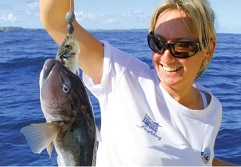 Blue cod is to Mainlanders what snapper is to their North Island counterparts.
It is probably the number-one species on their hit lists and this unfortunately has created sustainability issues in the top half of the South Island. Here there are much debated ‘no-take’ and ‘limited-take’ zones in place, along with strict size limits.
Commercially, cod are targeted in ‘pots’ while recreationally, line fishing is the predominant method. If there is a ‘dumb’ fish, it is cod. They have none of the guile or reticence of snapper and will eat just about anything, even bare hooks or ones ‘baited’ with a little bit of shiny cigarette paper. Cod can even be caught on hooks baited with cod.
Curried Cod Recipe
|
|
SpotX Wild Foods Recipe from Kathy Dunstan Ingrediants:
Directions:
|
Red Cod Recipes
Red Cod
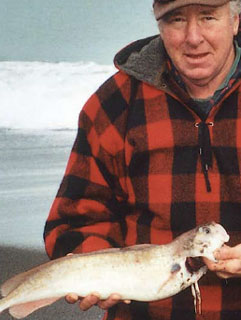 While many North Islanders pour scorn on red cod as an eating fish, further south it is regarded with a little more respect.
At times the waters around the beaches and river mouths ‘run red’ with cod, and rather than curse them – they are not renowned for their ‘sporting attributes’ – anglers in the know catch them for the table.
Red cod fillets require a little aging and are not at their best eaten immediately after filleting. Like ling, red cod is a densely-textured flesh and is best left to thoroughly chill. Leaving well-drained fillets in the refrigerator for a couple of days will do them no harm.
Red cod is good for fish pies and smoked, but you are unlikely to find it in most people’s list of ‘top 10 fish to eat’. It is used quite a bit in the South Island for fish and chips.
Classic Crayfish Mornay Recipe
|
|
SpotX Wild Foods Recipe from Kings Fishmarket Ingrediants:
Directions:
|
|
|
SpotX Wild Foods Recipe from Grant Dixon Ingrediants:
Directions:
|
Crayfish Recipes
Crayfish Medallions with Macadamia Sauce
Chargrilled Crayfish with Spicy BBQ Sauce
Crayfish Sandwich with Curry Mayonnaise
Barbecued Crayfish and Piquant Seafood Sauce
Crayfish
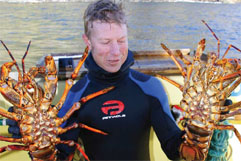
If there is a species that has been put on a pedestal as the pinnacle of Kiwi kaimoana, it is the spiny red rock lobster – crayfish. Over the years it has earned millions in overseas exchange and has made many of the commercial fishers, lucky enough to hold quota, rich men. Its dollar value sees the species, along with paua, at the head of the poachers’ hit list. In some regions it is estimated the ‘black market’ take is almost as high as the legitimate commercial harvest, both far surpassing the recreational catch. Despite the pressure on the fishery, crayfish still remains available to Joe Public provided they are prepared to put in the effort diving or potting for them. To many people a highlight of their holiday programme is to catch a few ‘bugs’ for the table.
The beauty of crayfish is that it can be prepared in so many different ways; its rich flesh requires little enhancement.
Like all seafood, crayfish benefit from taking a little care from the time they are caught to when they are served up. Once caught, the crayfish should be placed in a cool, damp spot. They will live for several days out of the water if kept cold and wet.
Most people prefer to deal with the catch as soon as practical. The first step is to kill the crayfish humanely by drowning it in a bin of cold fresh water. Placing a live crayfish directly into boiling water will result in the legs falling off more easily.
If you intend ‘cooking’ the crayfish immediately by boiling it, there are some simple steps to take to bring the best out of your catch. It is important to bring the water to a rolling boil before placing the crayfish in it. Do not overload the pot as it takes too long to bring it back on the boil; keeping the lid on the pot helps with this. Time the crayfish once the water starts to boil. The ‘just legal’ crayfish should be boiled for no longer than six minutes, and up to 12 minutes for ‘monster’ four-kilo-plus crayfish.
Once time is up take the crayfish out of the pot and place in a tub of cold water to halt the cooking process, then remove and leave to drain. A good way to do this is to hook the curled-up tails on the rim of a bucket.
Once cooled and the flesh set, the tail can be twisted free of the body and sliced lengthwise with a sharp, sturdy knife to split it. The alimentary canal will be exposed and this should be removed. Similarly the body can be sliced lengthwise in two, exposing the ‘engine room’. The yellow ‘mustard’ can be removed and used to give flavour to any sauce.
To many people, sucking the sweet morsels out of the legs and body is every bit as good as the tail meat. Use a nutcracker or a purposebuilt lobster claw cracking tool to crack the shell.
Moroccan Elephant Fish Recipe
|
|
SpotX Wild Foods Recipe from Petra Moorby Ingrediants:
Directions:
|

Elephant fish Recipes
Baked Elephant Fish with Mustard Sauce
Elephant Fish
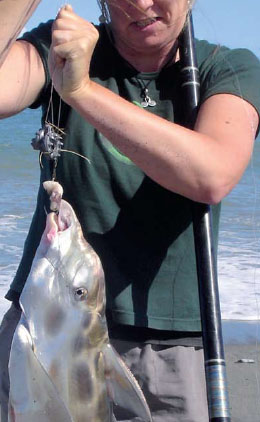 While it might not win any beauty pageants, the elephant fish is recognised in southern parts of New Zealand as a good eating specimen.
It features a large, fleshy, cartilaginous trunk that protrudes from the snout – and together with large winglike pectoral fins – combines to give the fish a rather grotesque deformed appearance rather like Quasimodo. The snout has a useful purpose, being used to root out crabs and shellfish from muddy or sandy bottoms. When handling the fish you need to be aware of the large, sharp folding spine that forms part of the dorsal fin.
Elephant fish are closely related to sharks, having a backbone of gristle rather than a skeleton. It is not surprising that the flesh tastes a bit like lemon fish (rig or dogfish) and is popular for fish and chips, as the firm flesh holds together well and you get two boneless fillets when you prepare it for the table. It is sold in the fish shops as silverfish and silver trumpeter.
Elephant fish is caught commercially by trawlers, but between October and late summer it comes within reach of surfcasters and boaties fishing inshore, sheltered waters such as Wellington Harbour.
Citrus Flounder Recipe
|
|
SpotX Wild Foods Recipe from Gillian Maire Ingrediants:
Directions:
|
Flounder Recipes
Flounder
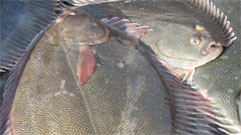 The name ‘flatfish’ covers a number of species in general terms, including yellow-bellied flounder, dabs and soles. Call them what you like; they are all good eating fish, with the yellow-bellied flounder being the culinary pick of the bunch.
These species can be found all over New Zealand in a variety of environments on the open mud and sandy bottoms; way out wide to the surf line inshore, as well as the sandbanks and mudflats of our harbours. They are trawled, netted and speared, the last done mostly on still nights in the shallows.
Divers gathering scallops and oysters regularly come across flounder and soles hunkering down on the ocean floor where they attempt to hide by covering themselves in silt and sand. It is only their oval outline that gives them away and when disturbed they have an amazing turn of speed over a short distance.
Fly casting and light-tackle anglers with a great deal of patience have turned catching flounder into something of an art form, using small crab-imitation flies or vegetables such as peas and corn to catch dinner. They report the flounder give a good account of themselves on the light gear.
As table fare, flounder are high up there in the top 10 of the most popular eating fish. They have a delicate flavour, not unlike john dory, and can be prepared simply by taking out the gut and cooking whole. Freshly caught flounder fried in clarified butter or a lemon-infused olive oil, with a little salt and pepper, takes a great deal of beating. Cooked flounder roe, which is not removed in the gutting process, is something of a delicacy.
There is a bit of a learning curve with successfully negotiating a flounder fillet. Cooked properly, the flesh can be easily picked off one side before flipping the whole fish over and demolishing the other side, steering clear of the small bones on the outer extremities of the backbone.
Larger flounder can be filleted using a sharp, flexible knife. Make the first cut from the back of the head on the diagonal past the gills and pectoral fin. Keeping the blade tight against the backbone, work down towards and over the spine, progressing back toward the tail, as you would for most other fish such as snapper. Leave the skin on as this crisps-up well and holds a great deal of flavour.
Gemfish in Chermoula Marinade Recipe
|
|
SpotX Wild Foods Recipe from Henry Scott Ingrediants:
Directions:
|
Gemfish Recipes
Gemfish
 When you are fishing in deep water for more desirable species such as hapuku and bass, those tentative bites you sometimes feel are quite often gemfish. Having hauled these fish out of the depths, you might be quite disappointed, but gemfish can make for a tasty meal if prepared properly.
Often wrongly identified as hake, gemfish are good eating if looked after and treated with the same respect you would hapuku and the like. They have an oily flesh that makes them particularly good as fodder for the smoker. Some say smoked gemfish is as good as it gets.
It is also a good species for cooking in a number of conventional ways and can be fried, steamed, baked and barbecued. Gemfish’s strong flavour and firm texture makes it ideal for Asian and Mediterranean-style dishes as it can withstand strong, bold flavours.
It is filleted the same way you would a kingfish or a trumpeter. The stomach cavity contains an off-putting yellow, bile-like liquid, which it pays to keep away from the flesh.
Quick Seafood Medley Recipe
|
|
SpotX Wild Foods Recipe from Janet Thorne Ingrediants:
Directions:
|
Balinese Bass Recipe
|
|
SpotX Wild Foods Recipe from Simon Mullens Ingrediants:
Directions:
|
Hapuku Bass and Bluenose Recipes
Bluenose Parcels and Mango Salsa
Bluenose Fillets with Smokey Tomatoes
|
|
SpotX Wild Foods Recipe from Grant Dixon Ingrediants:
Directions:
|
|
|
SpotX Wild Foods Recipe from Jade Chalmers Ingrediants:
Directions:
|
|
|
SpotX Wild Foods Recipe from Grant Dixon Ingrediants:
Directions:
|
Kingfish Recipes
Parsley and Parmesan-Encrusted Kingfish
|
|
SpotX Wild Foods Recipe from Peter Richards Ingrediants:
Directions:
|

Trout Recipes
|
|
SpotX Wild Foods Recipe from Bill Hohepa Ingrediants:
Directions:
|
Mao Mao Recipes
|
|
SpotX Wild Foods Recipe from Grant Dixon Ingrediants:
Directions:
|
Baked Mullet Recipe
|
|
SpotX Wild Foods Recipe from Shannon Miles Ingrediants:
Directions:
|
Grey Mullet Recipes
Grey Mullet
 While many people think that grey mullet is best used as bait, for snapper in particular, it tantalises human taste buds as smoked fish.
Mullet is popular smoked; the oily flesh that makes it ideal as a cut-bait also ensures it is a favourite among those who like their fish cured rather than cooked.
Split, gutted and gilled, mullet has a strong taste that is complimented by the smoking process. While smoked mullet roe is considered a delicacy, anglers value the gut, head and frames as bait or the basis of a good berley. Mullet is most common in the northern parts of New Zealand, where it is netted or beach-seined around our harbours and surf lines.
While most people consider it’s at its best as smoked fish, it can be prepared conventionally. The flesh is pinkish-grey and medium firm, with a high fat content.
Curried Octopus in Coconut Recipe
|
|
SpotX Wild Foods Recipe from John Eichelsheim Ingrediants:
Directions:
|
Octopus Recipes
Octopus
 Octopus is not an uncommon catch for recreational anglers.
Octopus is seldom kept, however, and even less often cooked and eaten. But octopus is delicious eating – in many people’s opinion at least as good as squid. If you intend to keep an octopus for the table, kill it quickly and humanely. One method is to ‘turn it inside-out’, which involves doing exactly what the description says, but this does take a little practice as it can be tricky.
Polynesian people bite an octopus between the eyes, which kills it. You can achieve the same result by pushing a knife into the animal’s brain between the eyes. A dead octopus, like all seafood, should be iced down immediately. It keeps well frozen whole.
There are many good recipes for octopus, which is particularly popular as food in the Mediterranean and the Pacific. The recipes that follow reflect this.
|
|
SpotX Wild Foods Recipe from PJ Falls Ingrediants:
Directions:
|
Piper Recipes
|
|
SpotX Wild Foods Recipe from Simon Jowett Ingrediants:
Directions:
|
Mako in Herb Butter Recipe
|
|
SpotX Wild Foods Recipe from Ray Steele Ingrediants:
Directions:
|
|
|
SpotX Wild Foods Recipe from Brad Kyle Ingrediants:
Directions:
|
Salmon Recipes
Gran Reid's Herb-Grilled Salmon
Stingray Casserole Recipe
|
|
SpotX Wild Foods Recipe from Tricia Stubbings Ingrediants:
Directions:
|
Stingray Recipes
Kiwifruit Squid Recipe
|
|
SpotX Wild Foods Recipe from Grant Dixon Ingrediants:
Directions:
|
Popeye’s Tarakihi Recipe
|
|
SpotX Wild Foods Recipe from Barry Robson Ingrediants:
Directions:
|
Tarakihi Recipes
Gran Reid’s Microwaved Tarakihi
Gran Reid's Cajun and Lemon Tarakihi
Mark’s Trevally Kokoda Recipe
|
|
SpotX Wild Foods Recipe from Mark Kitteridge Ingrediants:
Directions:
|
Trevally Recipes
Trevally
 Like kahawai, trevally was for many years considered only good as bait. The flesh is relatively dark and quite oily, making it ideal for smoking. Filleted, the fish has a strong flavour that works well in pasta and other dishes where sauces might overpower the more delicate taste of other species. Trevally is also excellent grilled or barbecued as steaks, fillets or cooked whole. Where possible, leave the skin on – it helps keep the fish together and the fat under the skin keeps the flesh moist.
Trevally makes brilliant raw or marinated fish and is great in sushi or as sashimi. Trevally is best eaten fresh, as it does not freeze well.
Trevally can be caught seasonally around most of the New Zealand coast and quite often the schools of these fish can be seen gorging in krill on the surface. While this makes them relatively easy to find and catch for recreational fishers, unfortunately a commercial seine boat can hoover up whole schools in a single sweep.
Trevally are easy to fillet and are dealt with in the same way as you would a snapper. Removing the skin can be a little more difficult and requires a sharp knife run flat and firm between the skin and the flesh to remove in one piece. Because of its lack of ‘real’ scales, some people cook their trevally fillets with the skin on.
Trumpeter Poached in Coconut Milk Recipe
|
|
SpotX Wild Foods Recipe from Andre Filou Ingrediants:
Directions:
|
Trumpeter Recipes
Trumpeter Poached in Coconut Milk
Poached Trumpeter in Fresh Tomato Sauce
Trumpeter
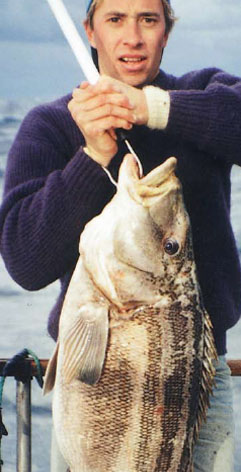 Trumpeter, a relative of the blue moki, is widely spread geographically.
While they are rarely caught north of the Bay of Plenty, they become more prolific the further south you travel.
Some of the best grounds can be found off the South Island’s eastern seaboard, from the Kaikoura Coast right down around the corner to Fiordland and including Foveaux Strait and Stewart Island. The larger specimens like deep water, preferably around structure, and tend to move offshore in the winter months. They are renowned for their fighting ability and take jigs as readily as they do cut baits. The latter, combined with flasher rigs, is a consistent performer.
Unfortunately for trumpeter, they are generally found in good-sized schools, making them an easy target for commercial fishers. They can be quite territorial, which means they are quickly cleaned out of a popular fishing spot.
The good news is that trumpeter is a great eating fish and it hangs out with other top-ten culinary contenders – blue cod, tarakihi and groper. It has a firm flesh which makes it ideal for a number of dishes, especially fish casseroles, as it holds together well.
There are no secrets to filleting trumpeter. It is done in the same way you would fillet a snapper or ‘pup’ groper. It is a fish that ‘ages’ well, gaining in flavour intensity by being refrigerated for a couple of days in a well-drained container.
Zambucca Tuna Nibbles Recipe
|
|
SpotX Wild Foods Recipe from Steve Haddock Ingrediants:
Directions:
|
Blackened Warehou Recipe
|
|
SpotX Wild Foods Recipe from Pete Lamb Ingrediants:
Directions:
|
Warehou Recipes
Warehou
 Warehou, often nicknamed ‘Hou’ by Wellington anglers who seem to have a colloquial name for every species in their waters, are widely distributed around the coastline of the South Island as well as the southern North Island.
They are a popular target species, for both recreational and commercial fishers, for their eating qualities. They have a firm flesh that is easy to fillet and skin.
Warehou inhabit the rocky shoreline and deepwater reefs down to around 120 metres. They tend to move in large shoals, making them quite vulnerable to commercial methods such as netting and trawling. Occasionally the fish will be found breaking the surface well out to sea and away from any obvious structure.
Recreational anglers catch them on bait or jigs. Black Magic Snapper Snatcher sabikis and the like also do the business.
Chive and Lemon Whitebait Fritters Recipe
|
|
SpotX Wild Foods Recipe from Cascade Whitebait Ingrediants:
Directions:
|
Jim’s Goose Roast Recipe
|
|
SpotX Wild Foods Recipe from Jim Hart Ingrediants:
Directions:
|
Canadian Geese Recipes
|
|
SpotX Wild Foods Recipe from David Robinson Ingrediants:
Directions:
|
Traditional Mutton Bird Recipe
|
|
SpotX Wild Foods Recipe from Pete Wiri Ingrediants:
Directions:
|
Muttonbird Recipes
|
|
SpotX Wild Foods Recipe from Annette Henderson Ingrediants:
Directions:
|
|
|
SpotX Wild Foods Recipe from Mark Airey Ingrediants:
Directions:
|
Pukeko Recipes
|
|
SpotX Wild Foods Recipe from Jan Ambler Ingrediants:
Directions:
|
|
|
SpotX Wild Foods Recipe from Dave Emery Ingrediants:
Directions:
|
|
|
SpotX Wild Foods Recipe from Mark Draper Ingrediants:
Directions:
|
Chamois 'n' Pork Crockpot Recipe
|
|
SpotX Wild Foods Recipe from Derek Meyer Ingrediants:
Directions:
|

Chamois
 A native to central and southern Europe and a member of the antelope family, chamois were introduced into New Zealand in 1907.
Released in the Mount Cook area they adapted to their new habitat with ease, and without natural predators their population exploded. Many animals are shot from helicopters and on foot by recreational hunters in an effort to control their numbers.
There are no chamois in the North Island; their natural habitat is the steep, inaccessible, southern-alpine mountain ranges. With the increase in numbers, resident herds have been found in the lowlands of the West Coast and in the forests behind Kaikoura.
Venison Back Steak in Mustard Recipe
|
|
SpotX Wild Foods Recipe from Steve Smith Ingrediants:
Directions:
|
|
|
SpotX Wild Foods Recipe from Mark Domett Ingrediants:
Directions:
|
Goat Recipes
Mum’s Hawaiian Rabbit Recipe
|
|
SpotX Wild Foods Recipe from Margaret Dixon Ingrediants:
Directions:
|
Rabbit Recipes
|
|
SpotX Wild Foods Recipe from Bert Christensen Ingrediants:
Directions:
|
Mum’s Hawaiian Rabbit Recipe
|
|
SpotX Wild Foods Recipe from Margaret Dixon Ingrediants:
Directions:
|
Rabbit Recipes
|
|
SpotX Wild Foods Recipe from Barry Robson Ingrediants:
Directions:
|
Tahr Recipes
|
|
SpotX Wild Foods Recipe from Greg Mills Ingrediants:
Directions:
|
Marinated Roast Pork Recipe
|
|
SpotX Wild Foods Recipe from Barbara Simmons Ingrediants:
Directions:
|
Wild Pig Recipes
Curried & Stir-Fried Wild Pork
|
|
SpotX Wild Foods Recipe from Polly Were Ingrediants:
Directions:
|
Kina Recipes
|
|
SpotX Wild Foods Recipe from Bruce Haslam Ingrediants:
Directions:
|
Mussel Recipes
Gran Reid's Tomato and Onion Mussels
|
|
SpotX Wild Foods Recipe from Callum McCullum Ingrediants:
Directions:
|
|
|
SpotX Wild Foods Recipe from Sam Mossman Ingrediants:
Directions:
|
Paua Recipes
Creamy Paua and Watercress Spaghetti
|
|
SpotX Wild Foods Recipe from Ian Neary Ingrediants:
Directions:
|
Pipis, Tuatua, Cockles Recipes
|
|
SpotX Wild Foods Recipe from Margret Jamieson Ingrediants:
Directions:
|