
Pan-roasted Hare Fillets with Sauce
|
|
SpotX Wild Foods Recipe from John Kiriakidis - Rod and Rifle Magazine Ingrediants:
Directions:
|

Rabbit Recipes
Hare
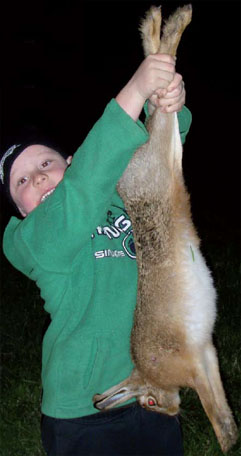 The brown hare was brought to New Zealand from England and Europe as a food source and for sport. It was first liberated in New Zealand in 1851 and from then on a number of liberations were made at most major ports right through until the 1870s. Hares spread quickly throughout the country, favouring the open, dry plains of both islands. The greatest density of hares is in the subalpine grasslands along the eastern side of the Southern Alps.
In 1866 hares were declared a pest, although the population, once established, has not changed markedly since. Hares are nocturnal and solitary animals, pairing up in the spring when they can be seen during the day going through their strange mating antics.
Unlike rabbits, hares do not live in burrows. Each animal occupies a shallow nest in flattened grass called a form. For defense they rely on their speed, which is reported to be up to 70-kilometres an hour. Larger than a rabbit and with long, strong hind legs, hares have a redder and stronger tasting meat. The saddle of a hare is a substantial size and can provide a good meal.
To tenderize the meat it pays to hang the gutted hare for a day or two in a cool place. In Europe they would usually hang the hare for a week before preparing it for the table. The traditional jugged hare was portioned, marinated and cooked in a jug set in a pan of water. It was then served with a sauce made from its own blood. As with all game, young animals have the best meat; avoid lactating does and old bucks.