
Rabbit Pie
|
|
SpotX Wild Foods Recipe from Gerald Evans Ingrediants:
Directions:
|

Rabbit Recipes
Rabbit
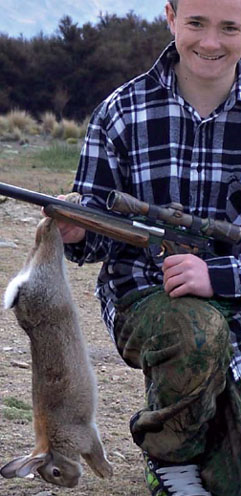 Captain James Cook first released rabbits in New Zealand in 1777 as a source of meat and fur. With limited habitat they spread slowly until farmers started to clear the land. As the extent of suitable habitat expanded, so did the rabbit population, and by 1890 they were present throughout most of the country.
The male and female rabbit are similar in appearance with the female having a narrower head. Females are called does, males are known as bucks and baby rabbits are kittens.
Rabbits are nocturnal; they spend most of their day underground in the safety of their burrow, coming out in the evening to feed through the night. When rabbits are observed out and about during the day, it often indicates a high population.
Unlike pheasant and hare, rabbits need to be gutted in the field as soon as they have been killed so as not to taint the meat. Check the liver for cysts – it should be an even blood-red colour. If there are cysts or white spots on the liver discard the rabbit. Take special care not to get rabbit urine on the meat. Young does (under eight months old) provide the best meat. Avoid lactating does. After skinning, check for and remove the scent glands from under the front legs at the natural seam where the legs join the body. They are small waxy-looking lumps – do not cut.
Generally the rabbit is butchered into seven pieces: legs, back straps and the carcass for stock. The legs are easy to remove – the front legs are not attached by bone and are removed by following the natural seam with a sharp knife. The hind legs need to be cut all the way around the base of the muscle, then folded over and dislocated from the hip joint. To remove the back strap, run a sharp knife down beside the spine to the hip joint then out. Simply grab the end of the back strap and it will peel straight off the rib cage.
A young, tender rabbit is now ready to cook, but if you are not so keen on the gamey taste you can remove the bones and soak the meat in a pot of salty water overnight to blanch it. Then simmer for two hours until a fork can pierce the meat. Do not overcook. At this stage you can cook the meat as you would chicken and can replace most chicken recipes with rabbit meat, remembering that wild rabbit meat is very lean and will dry out quickly.